Articles
All

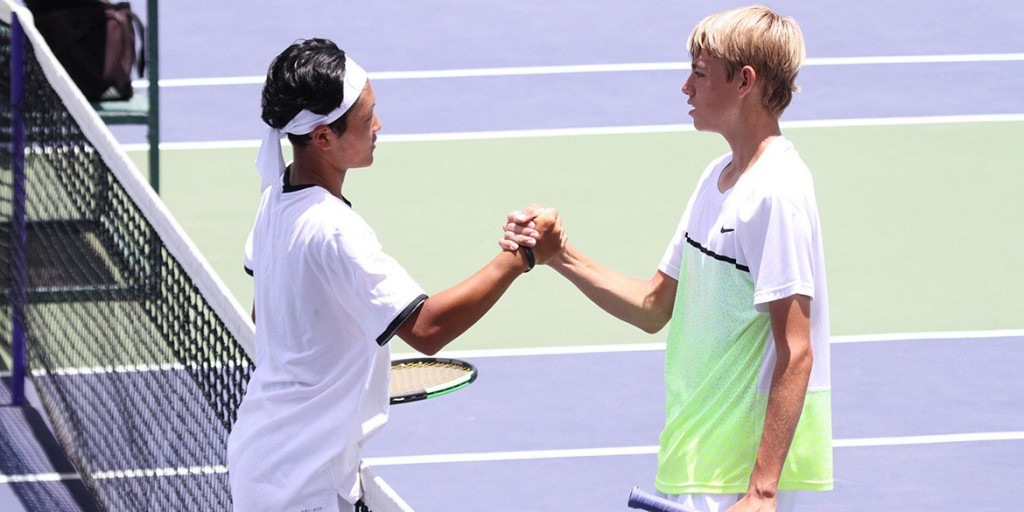
In junior tennis, self-officiating often leads to high-stakes line-call disputes and spectator tension. USTA Tournament Director Evgeniia Levashova shares five core strategies to maintain fair play—including pre-match briefings, strategic deployment of roving officials, consistent point penalty enforcement, clear spectator boundaries, and incident tracking—supported by modern line-calling technology.
When a disputed line call threatens to derail a junior tennis match, tournament directors need a way to maintain fair play, even when resources are limited.
Across the United States, dedicated chair umpires and line judges are often financially and logistically impractical for junior tournaments. Under standard United States Tennis Association (USTA) guidelines, most junior draws up to age 16 rely on self-officiating, leaving players responsible for calling their own lines.
Under competitive pressure, disputed calls and over-involved parents can quickly escalate tension. So how can tournament directors maintain accountability and protect the integrity of competition? Here are five strategies to help.
Regulatory compliance begins long before players step onto the court. One common mistake is assuming that players and parents are fully familiar with the USTA's Friend at Court regulations.
To reduce disputes, tournament directors should implement a mandatory digital pre-match briefing covering:
Where appropriate, require players and parents to acknowledge these expectations in advance. Clear communication helps prevent misunderstandings and reinforces accountability from the start.
When a facility has dozens of matches running simultaneously, assigning an official to every court is often financially impossible. Tournament directors must therefore make strategic use of their staff.
Officials should be assigned to designated roving zones rather than remaining at the central tournament desk. Maintaining a consistent, visible presence along the back fences can help discourage misconduct and identify problems before they escalate.
Directors should also track disputes to identify recurring issues. A shadow request log, for example, can flag courts experiencing consecutive line-call disputes.
When repeated disputes occur, a roving official can be assigned to observe the match. While they cannot overrule previous calls, their presence provides additional oversight and helps discourage further misconduct.
In self-officiated matches, verbal warnings from a coach or supervisor may not carry the same formal authority as an official's ruling. Tournament directors must ensure staff understand and consistently apply the USTA Point Penalty System (PPS).
When a player engages in unsportsmanlike conduct, intentional foot faults, or audible obscenities, officials should respond promptly and follow the prescribed disciplinary process. Depending on the applicable rules, penalties can escalate from a warning to a point penalty and then a game penalty.
Consistency is essential. Officials should avoid prolonged negotiations and apply the rules objectively, regardless of the score or the players involved. Consistent enforcement reinforces accountability and helps prevent disputes from escalating.
When emotions run high in junior tennis, spectator interference can quickly escalate on-court disputes. Parental involvement, in particular, can add pressure and undermine fair competition.
To protect players and maintain a safe competitive environment, tournament directors should establish clear spectator policies before the event begins. These should cover:
Depending on the applicable rules and circumstances, consequences may include disciplinary action against a player or removal of a disruptive spectator, with local law enforcement involved where necessary.
Clear boundaries help protect players and keep the focus on the match.
A tournament director's responsibility doesn't end when the final score is recorded. Building a sustainable culture of sportsmanship requires reviewing incidents and identifying recurring patterns.
Facilities should maintain appropriate records of:
Where appropriate, documented incidents should be reported to the relevant regional USTA section in accordance with its reporting procedures.
Tracking recurring issues helps tournament directors improve oversight, address persistent problems, and reinforce accountability beyond a single match or event.
Effective tournament management isn't about assuming perfect sportsmanship. It's about building systems that promote fair competition through clear rules, consistent enforcement, and accountability.
Even with clear rules and consistent enforcement, disputed line calls remain a challenge in self-officiated tennis. For tournament directors, finding ways to support more consistent line calling is an important part of maintaining fair competition.
Baseline offers camera-based line-calling solutions for clubs and tournament organizers, providing an additional layer of support when line calls are disputed.
Technology can't replace effective tournament management, but it can complement clear expectations, appropriate officiating, and consistent enforcement to help create a fairer playing experience for everyone on court.