.svg)
.svg)

Articles
All


Junior tennis is moving past basket feeds. This piece breaks down the 2026 academy tech stack, from smart courts to gamified drills, and shows how coaches can turn real-time data into pressure training that carries over to tournament day.
The traditional image of a high-performance youth tennis practice in America is undergoing a massive shift. For decades, the gold standard of junior development relied on a sterile, repetitive formula: a coach standing at the net with a shopping cart of balls, feeding identical crosscourt forehands to a teenager who strikes ball after ball in a behavioral vacuum. While this closed-loop methodology was effective for basic muscle memory, it faces a structural crisis in 2026. Today's junior players, raised in a hyper-digital world of instant stimulation, quickly disengage from sterile basket feeds. To maintain intensity and accelerate real-time development, forward-thinking programs are aggressively deploying the modern tennis academy stack.
As a USTA tournament director and active coach, I monitor this technological evolution from the inside. The goal of integrating digital tools on the court isn't to turn tennis into a video game; it is to harness the psychology of immediate feedback loops to bridge the execution gap between weekday practices and weekend tournament draws.
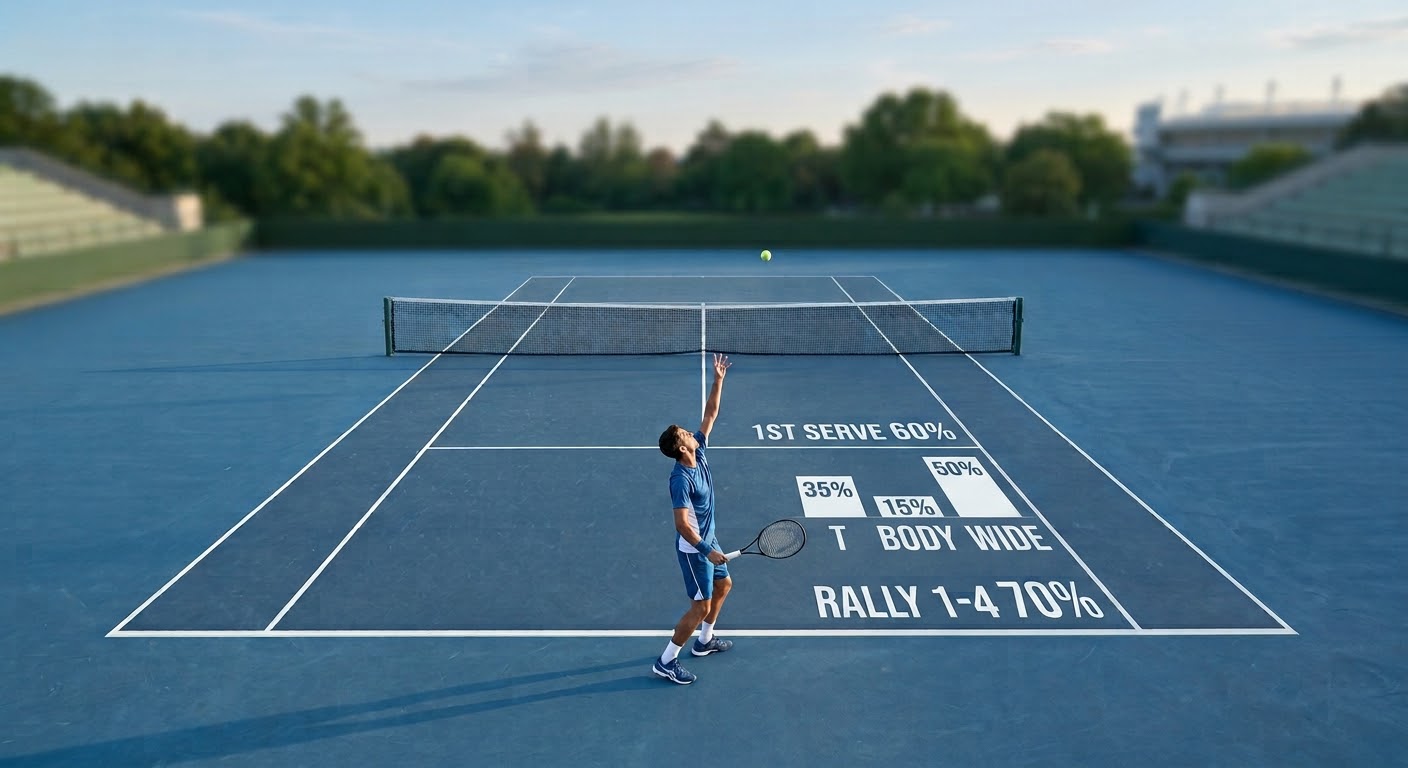
The standard infrastructure of a premium athletic facility has evolved far beyond basic video analysis. A competitive training environment now relies on an interconnected ecosystem of hardware and software built for measurable progress tracking. At the core of this setup is smart court technology: multi-angle camera arrays paired with AI-driven tracking systems that log every shot in real time.
This hardware works alongside wearable biometric sensors and cloud-based performance portals, giving coaches a complete picture of player development. Instead of waiting for a post-match review, the stack captures data — including net clearance margins, spin rates, baseline recovery speed, and contact-point consistency — the instant the racquet strikes the ball. The payoff for an academy is immediate: parents and athletes get empirical proof of development, which shifts the conversation from subjective coaching opinions to objective data and tends to improve retention.
The real magic of the modern tech stack happens when coaches use this data to run gamified training sessions on the practice court. If you want to keep a fourteen-year-old athlete intensely focused during a grueling two-hour training block, you have to replace polite encouragement with target-based, interactive challenges.
By using on-court digital monitors or live audio feedback, coaches can turn routine accuracy drills into high-stakes competitive arenas. Instead of telling a player to "hit deep," we run live leaderboards connected to the court's sensors. We set up streak challenges where a player has to land five consecutive balls within three feet of the baseline at a specific ball speed. If the sensor detects a short ball, the streak resets to zero and a live audio cue alerts the court.
Suddenly, a mundane drill triggers the same tight, suffocating psychological arousal a junior player feels facing a break point in an official tournament draw. That's how you use immediate feedback loops to condition emotional self-regulation under pressure.
However, even the most advanced academy tech stack is a wasted investment if the data isn't filtered correctly. Many amateur coaches and over-involved parents fall into the trap of tracking vanity statistics, like maximum serve speed or total daily hit count. These numbers look impressive on a smartphone screen but carry zero tactical value for winning matches.
To deliver real athletic longevity, coaches have to train families to look at actionable metrics instead: first-serve return placement under pressure, second-serve consistency deep in the box, and court recovery speed after defensive scrambling. When the stack shows that an athlete's net clearance margin drops by twenty inches once their heart rate crosses 160 beats per minute, the coach walks away with a precise, data-driven blueprint for the next training session.
True competitive excellence in the modern era can't be built by clinging to outdated, sterile coaching habits, and it can't be outsourced entirely to automated cameras either. The future of American youth tennis belongs to coaches who use smart court ecosystems to build character, demand accountability, and turn the chaotic pressure of the junior circuit into a manageable, structured science.